
 Waze
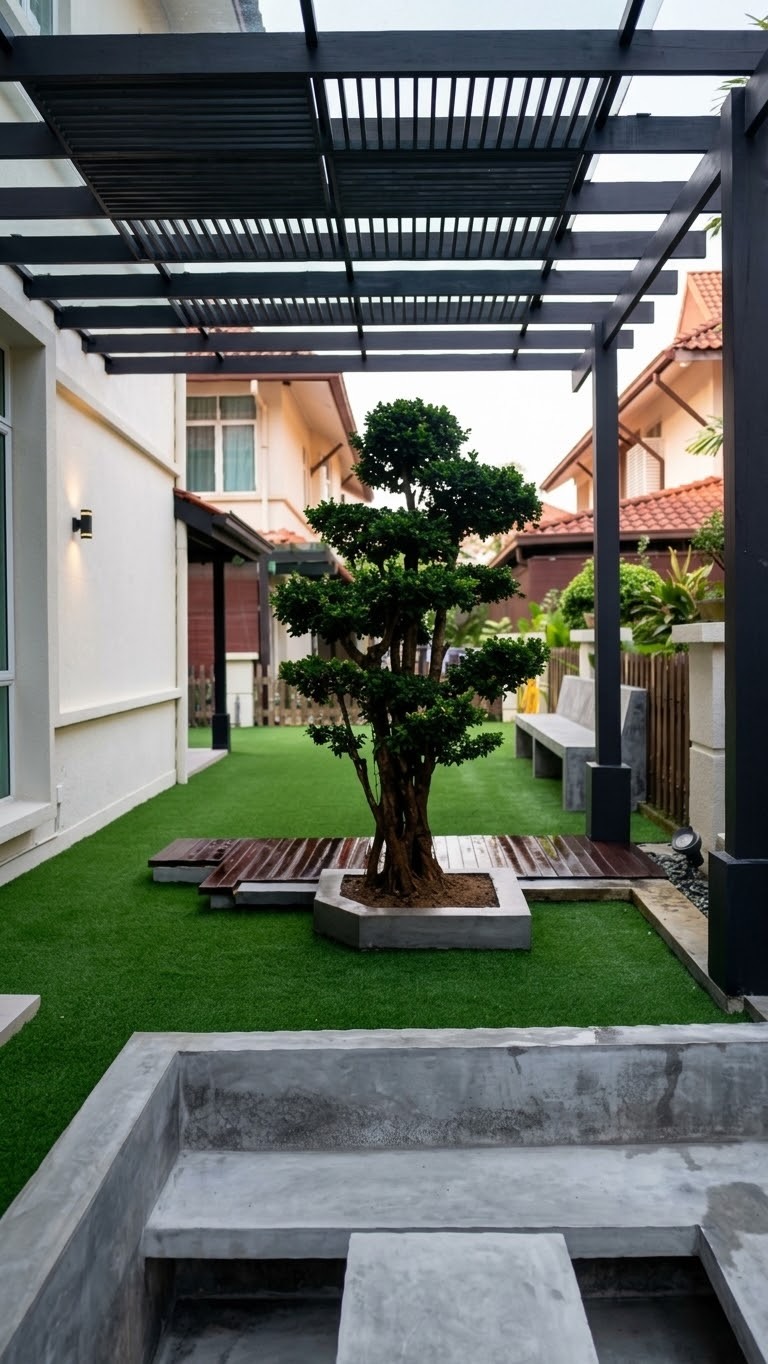
Japanese grass
The finest, softest and most even of the four: a show lawn for a garden in full sun. It grows slowly, needs little mowing, and costs more than the others.
At a glance
- Also called
- Rumput Jepun
- Look
- Very fine, soft and even
- Sun
- Full sun, 6 hours or more
- Wear
- Walking and sitting; slow to repair
- Mowing
- Little: it grows slowly
- Good for
- A show lawn in full sun
- Sold as
- Pieces, ready to lay
- Price
- Ask us for today's price.
How it looks
Japanese grass has very fine, soft leaves packed close together. It gives the most even, carpet-like look of the four.
It costs more than the other grasses. Grass names differ from one seller to the next, so see the pieces at our nursery before you buy.
Sun and shade
It needs full sun: 6 hours or more a day. In part shade it gets brown and yellow patches, and in shade it dies out.
If a wall or a tree shades part of the lawn, lay cow grass in that part.
How much wear it takes
It takes walking and sitting. It grows slowly, so if it gets worn or damaged, it takes a long time to repair.
For a lawn the children play on every day, Philippine grass or cow grass are the better choice.
Upkeep and mowing
It grows slowly, so it needs little mowing. A light trim keeps it even; never cut off more than a third at once.
Feed it lightly with baja every 2 to 3 months once it has rooted, and water it in long dry spells.
How to lay it
How to lay Japanese grass
Our heat, our heavy afternoon rain and our clay soils decide most of it. The same steps work for all four grasses.
- 01
Clear it
Pull out weeds with their roots, and clear stones, old roots and builders' rubble. Weeds left under new grass come straight back through it.
- 02
Loosen and level
Dig over the top 4 to 6 inches (10 to 15 cm), break up the lumps and rake it level. Fill low spots with tanah merah and firm them down.
- 03
Let the rain run off
Give the lawn a gentle slope away from the house, towards a drain, with no dips where water can sit. On heavy clay, mix in sand and organic soil so it drains.
- 04
Spread the soil layer
Spread 1 inch (2.5 cm) of organic soil or tanah hitam on top, or 2 inches (5 cm) on hard or poor ground. Rake it level and water it lightly.
- 05
Lay it tight
Lay the pieces the day they arrive: stacked in the sun, they heat up and turn yellow. Start along a straight edge, push each piece tight against the next, and stagger the joins like bricks.
- 06
Press it down
Press every piece down firmly so its roots touch the soil. Fill the gaps with sand or soil.
- 07
Water every day
Water well straight away, then every morning for about two weeks, unless it rains. Keep off it while the roots take.
- 08
The first mow
After about 2 to 3 weeks, when the pieces have rooted and don't lift when you tug them. Set the mower high, and never cut off more than a third at once.
Japanese grass
Common problems here, and the fix
What you see
Brown patches in part shade
What to do
Japanese grass needs full sun. Let more light in, or lay cow grass in the shaded part.
What you see
Yellow or brown pieces in the first weeks
What to do
They are thirsty, or not touching the soil. Water deeply in the morning and press them down firmly.
What you see
Water sitting after rain
What to do
Fill the dips, give the lawn a gentle slope towards a drain, and loosen clay with sand and organic soil. Don't water ground that is already wet.
What you see
Thin, pale grass in the shade
What to do
Not enough sun. Trim branches to let light in. Under a car porch, eaves or thick trees, use artificial grass or pebbles instead.
What you see
Brown or yellow patches that spread in wet weeks
What to do
Usually a fungus. Water only in the morning so the grass dries before night, don't overwater, help the water drain, and hold back the baja until it stops. Still spreading? Send us a photo.
What you see
Weeds coming up
What to do
Pull them out with the root as soon as you see them, before they flower. Thick grass, mowed at the right height, leaves weeds less room.
What you see
Brown after mowing
What to do
Cut too short at once. Mow little and often, and never take off more than a third of the height.
What you see
Yellow spots where a dog wees
What to do
Rinse the spot with plenty of water soon after.
Lawn calculator
How much Japanese grass do you need?
Type the size of your garden in feet or metres. The calculator gives what to order, rounded up, and a list to send us on WhatsApp.
Work it outLaid by our team
We can lay it for you
Our team lays lawns across the Klang Valley, from our nursery in Sungai Buloh. Send us the size and a few photos of the space.
Japanese grass
Answers
Is Japanese grass worth it?
For a lawn that is mostly looked at, in full sun, yes: it gives the finest look and needs little mowing. In shade, or for a lawn the children play on, choose another grass.
Why is my Japanese grass going brown?
Usually too little sun, or water sitting after rain. It needs 6 hours of sun or more, and ground that drains.
How much Japanese grass do I need?
The area of your garden plus 5% for cutting around the edges. Our lawn calculator works it out from your measurements, with the soil to go under it.
Grass types
Other grasses
- Cow grassCarpet grass · rumput karpet daun lebar · Axonopus compressus
- Look
- Broad, flat leaves in a soft green
- Sun
- Full sun to part shade
- Wear
- Everyday family use; fills worn patches fast
- Mowing
- Often: every 1 to 2 weeks in the rainy months
- Good for
- Family lawns, and gardens with some shade
- Philippine grassRumput Filipina
- Look
- Fine, narrow leaves in a dense, soft carpet
- Sun
- Full sun, 6 hours or more
- Wear
- Hard-wearing; slow to fill worn patches
- Mowing
- Less often than cow grass
- Good for
- A neat lawn in full sun, with children and pets
- Pearl grassRumput mutiara
- Look
- Very fine, low and flat
- Sun
- Sun, or shade for part of the day
- Wear
- Light use: walking and sitting
- Mowing
- Little: it stays low
- Good for
- A low, tidy lawn to look at
- Artificial grassRumput tiruan · synthetic grass
- Look
- Always green and even
- Sun
- Anywhere, even indoors; hot in full sun
- Wear
- Takes play; brush flattened blades up
- Mowing
- None
- Good for
- Shade, balconies, rooftops, indoors