
 Waze
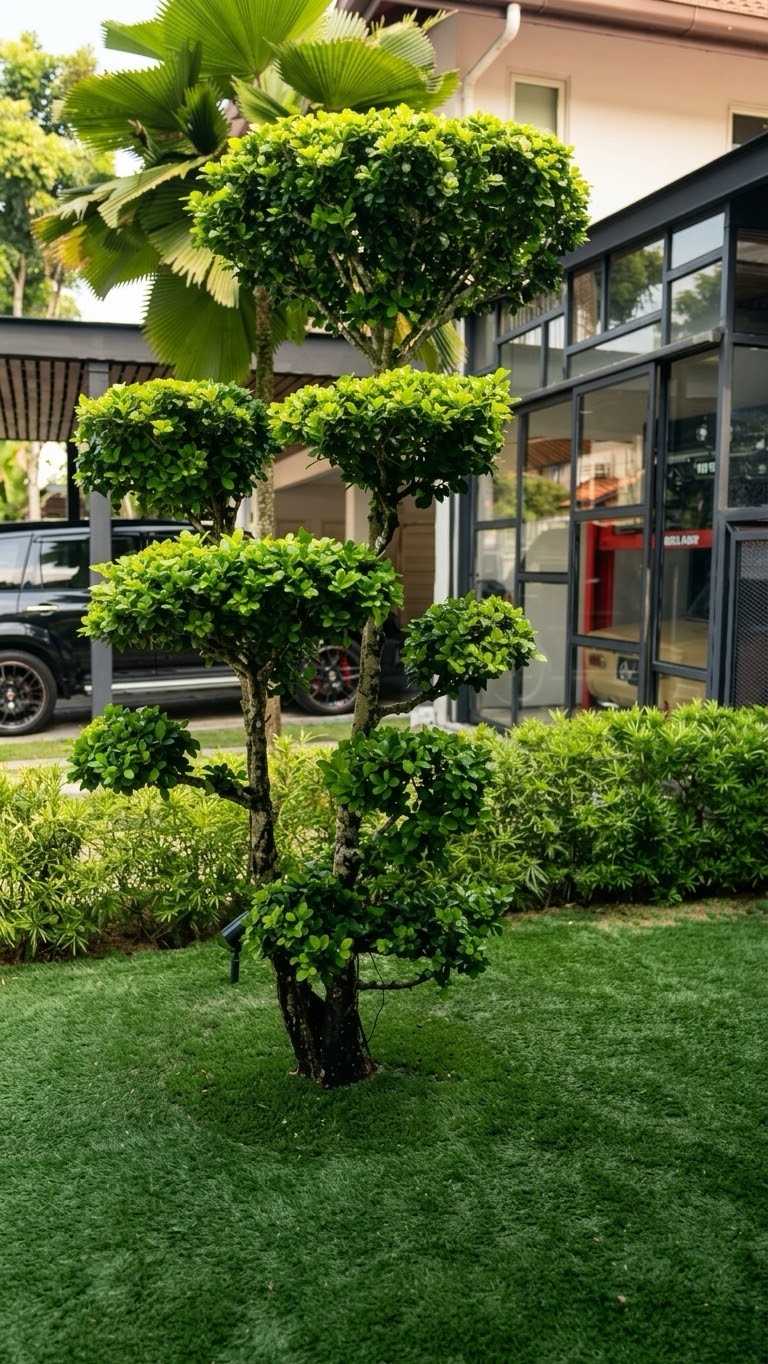
Artificial grass
Green all year, with no mowing or watering. It is the answer for deep shade, balconies, rooftops and indoors. In full afternoon sun, it gets hot.
At a glance
- Also called
- Rumput tiruan · synthetic grass
- Look
- Always green and even
- Sun
- Anywhere, even indoors; hot in full sun
- Wear
- Takes play; brush flattened blades up
- Mowing
- None
- Good for
- Shade, balconies, rooftops, indoors
- Sold as
- 1 m × 1 m pieces (25 mm), 2 m wide rolls (30 mm), other piles by the metre
- Price
- Ask us for today's price.
Which pile height?
The pile is how long the blades are.
10 to 15 mm: short and firm. For indoors, balconies and steps; the easiest to keep clean.
25 to 30 mm: like a real lawn. For gardens and play areas.
40 to 50 mm: thick and soft, a lush look up close. Brush it now and then to keep it standing up.
What we sell
1 m × 1 m pieces with a 25 mm pile, easy to carry and fit.
Rolls 2 m wide and 25 m long with a 30 mm pile, also sold by the metre.
Other piles from 10 mm to 50 mm, by the metre or the roll.
Joining net in 1 ft × 1 m strips, and grass glue, for the joins.
Indoors and on balconies
Indoors, lay it on a clean, dry floor. A short pile is the easiest to sweep or vacuum.
On a balcony, lay drain cell (lapik) under it so rain and washing water run to the floor drain, and keep the drain uncovered so you can clear it.
There is nothing to water, so nothing drips onto the flat below.
Heat in the sun
In direct afternoon sun, artificial grass gets very hot: too hot for bare feet and for paws.
It is at its best in shade, and on covered balconies and rooftops. A rinse with the hose cools it for a while.
Drainage
Rain drains through small holes in the backing, so whatever is underneath has to drain too.
On soil: a level, firm base with a thin layer of sand, sloping slightly so the water runs off.
On concrete, roofs and balconies: drain cell under it, so water runs to the drain instead of sitting in puddles.
Looking after it
Brush it now and then so the blades stand up, especially where people walk.
Clear leaves before they rot and stain it.
Rinse the spot where dogs wee, or it starts to smell. The rain does most of the rinsing for you.
Artificial grass
How to lay it on soil
- 01
Clear it
Pull out weeds and roots, and clear stones. Weeds left behind can come up through the joins.
- 02
Level and firm
Level the ground and firm it down, with a slight slope so the rain runs off.
- 03
Spread the sand
Spread about 1 inch (2.5 cm) of sand, level it and firm it, so the top is smooth.
- 04
Roll it out
Lay it with all the blades leaning the same way, or the joins will show. Leave it flat for a few hours so the creases drop out.
- 05
Cut and join
Cut from the back with a sharp knife. Lay joining net under each join, spread the glue, and press both edges down onto it.
- 06
Finish
Make sure the edges can't lift, then brush the blades up.
Artificial grass
How to lay it on concrete, a roof or a balcony
- 01
Sweep and check
Sweep the floor and check that rain runs to the drain.
- 02
Lay the drain cell
Lay drain cell across the floor, leaving the drain uncovered.
- 03
Roll it out
Lay it with all the blades leaning the same way, and cut it to fit.
- 04
Join it
Lay joining net under each join, spread the glue and press the edges down.
- 05
Keep the drain reachable
Cut a small flap over the floor drain, so you can lift it and clear the drain.
Artificial grass
Common problems here, and the fix
What you see
Water sitting on it or under it
What to do
The base isn't draining. On soil, level it with a slope and a layer of sand; on concrete, use drain cell and keep the drain clear.
What you see
Joins showing
What to do
The blades lean different ways, or the edges aren't tight. Lay it again with all the blades the same way, glued over joining net.
What you see
Edges lifting
What to do
Not enough glue, or an uneven base. Glue the edge again and weigh it down until it sets.
What you see
Flat blades where people walk
What to do
Brush against the lean of the blades with a stiff brush.
What you see
A smell where dogs wee
What to do
Rinse the spot with plenty of water, often.
What you see
Too hot to walk on
What to do
In the afternoon sun, it will be. Shade the area, or rinse it to cool it for a while.
Lawn calculator
How much artificial grass do you need?
Type the size of your garden in feet or metres. The calculator gives what to order, rounded up, and a list to send us on WhatsApp.
Work it outLaid by our team
We can lay it for you
Our team lays artificial grass across the Klang Valley, on soil, concrete, roofs and balconies. Send us the size and a few photos of the space.
Artificial grass
Answers
Does artificial grass get hot?
In direct afternoon sun, yes: too hot for bare feet. It is at its best in shade, and on covered balconies and rooftops.
Can I lay artificial grass on a balcony?
Yes. Use a short pile (10 to 15 mm), lay drain cell under it, and keep the floor drain uncovered.
Can I buy it and lay it myself?
Yes. We sell 1 m × 1 m pieces, 2 m wide rolls and other piles by the metre, with joining net and glue. Our lawn calculator works out how much you need.
Grass types
Other grasses
- Cow grassCarpet grass · rumput karpet daun lebar · Axonopus compressus
- Look
- Broad, flat leaves in a soft green
- Sun
- Full sun to part shade
- Wear
- Everyday family use; fills worn patches fast
- Mowing
- Often: every 1 to 2 weeks in the rainy months
- Good for
- Family lawns, and gardens with some shade
- Philippine grassRumput Filipina
- Look
- Fine, narrow leaves in a dense, soft carpet
- Sun
- Full sun, 6 hours or more
- Wear
- Hard-wearing; slow to fill worn patches
- Mowing
- Less often than cow grass
- Good for
- A neat lawn in full sun, with children and pets
- Pearl grassRumput mutiara
- Look
- Very fine, low and flat
- Sun
- Sun, or shade for part of the day
- Wear
- Light use: walking and sitting
- Mowing
- Little: it stays low
- Good for
- A low, tidy lawn to look at
- Japanese grassRumput Jepun
- Look
- Very fine, soft and even
- Sun
- Full sun, 6 hours or more
- Wear
- Walking and sitting; slow to repair
- Mowing
- Little: it grows slowly
- Good for
- A show lawn in full sun